CHOICE ABOVE ALL OTHER
LANDS
Book of Mormon
Covenant Lands According to the Best Sources
|
Species of Animals in Book of Mormon Country |
No Mention of Monkeys or Palm TreesThe Book of Mormon names animals like "...horses, and asses, ...elephants ... cureloms and cumoms; all of which were useful unto man, and more especially the elephants and cureloms and cumoms." (Ether 9:19)
According to the Book of
Mormon, varieties of "cattle" inhabited the New World. Without these the Nephites would
have been unable to fully keep the Law of Moses.
(1 Nephi 18:25,
Mosiah 2:3,
3 Nephi 28:22)
Mention of "the goat, and the wild goat", "suckling lamb" and "sheep" should
be take as literally as their mention in the Bible. Enos tells us that the Nephites raised 'flocks of
all manner of cattle of every kind..."
(Enos 1:21) The use of the word "flocks" in connection
with "cattle" is appropriate. The Hebrew word translated
"cattle", "miqneh" (מִקְנֶה),
means any of a variety of domesticated animals that may be bought or
sold.
The
animal referred to by the Hebrew word "hamor"
(חֲמוֹר)
is translated "ass" in the English Bible. "Hamor"
is tied to a verb which means "be red". In the Horses and
elephants (mastodons, mammoths) were native to North Ancient elephant remains
have been found throughout Some fragments of an
elephant (mastodon) were exhumed from a mound in The Book of Mormon
mentions "animals of the forest" and lists various "beasts
of the forests"
(Ether 10:19,
1 Nephi 18:25), but the word jungle
is nowhere in the English translation.
(Enos 1:3)
There is no mention of any recognizable animal
in Nephite or Jaredite scripture that is out of place in a temperate
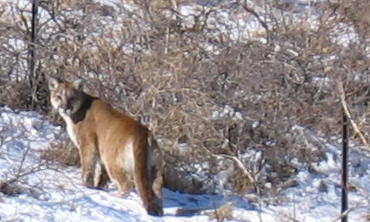
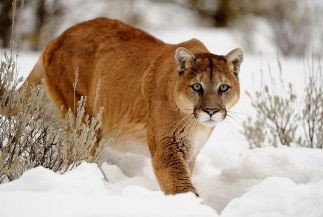
climate. This includes "lions" (cougars).
(Mosiah 20:10, The Book of Mormon "lion" may in fact still prowl the bogs and wildness of Niagara's narrow neck. ("Cougar populations roaring back in US and Canada") The Book of
Mormon makes no claim about beekeeping in ancient In The Hebrew, and possibly Nephite word for "bee" is "devorah" (דְבוֹרָה, Isaiah 7:18, 2 Nephi 17:18). Being a feminine word, one might think that its plural form would feature the feminine plural ending "ot", hence "devorot". But the plural traditionally uses the masculine ending "im", hence "devorim". "Devash" (דְבַשׁ) is translated "honey" in the scriptures, but it can mean date-honey, or honey (syrup) made from fruits as well as from bees. The "honey" listed as an article of trade in Ezekiel 27:17 may in fact be grape syrup. (Brown - Driver - Briggs - Gesenius Hebrew - Aramaic Lexicon) Jacob son of Lehi remarked about buying "wine and milk without money and without price" (2 Nephi 9:50) Jacob's expression may be equivalent to his older brother Nephi's remark about buying "milk and honey, without money and without price." (2 Nephi 26:25) One kind of honey among the Nephites may have been a condensed or evaporated wine, a syrup made from grapes. (3 Nephi 14:16) Though "wild honey" was among the provisions of Lehi's company (1 Nephi 17:5; 18:6), there is no scriptural indication that honeybees were present in the American Promised Land. If the setting for the
Book of Mormon were tropical, we might expect at least one mention of a
distinctly tropical
species. Monkeys and palm trees, abound in The
Hebrew word "qof"
(קוֹף)
means monkey. The plural form of this word is translated "ape"
in the King James Bible.
(1 Kings 10:22,
2 Chronicles 9:21) The Israelites may have seen little
distinction between apes and monkeys.
(II
Chronicles. IX.21, Septuagint) Some scholars believe that
"qof" is an Egyptian loanword. Lehi, and therefore Nephi, would
certainly have known this word. In fact, the Hebrew letter "quf"
(ק)
may have evolved from a hieroglyph of a monkey
with its tail.
The
Hebrew / Aramaic word "tamar" (תָמָר)
means palm tree.
(Deuteronomy 34:3) Why does
the Bible mention palm trees? There are, of course, palm trees in the lands surrounding The Book of Mormon speaks
of "dragons"! In fact, "dragons" are always
mentioned in the Book of Mormon in the context of combat: "...Put on thy
strength, O arm of the Lord...Art thou not he that hath cut
Rahab, and wounded the dragon?"
(2 Nephi 8:9,
Isaiah 51:9) A
Hebrew word translated "dragon" is "tannin"
(תַנִין).
In the above verse, "tannin" can be translated "sea
monster" or "crocodile". Depending on the context, "tannin"
can mean a whale, or a venomous serpent.
(Genesis 1:21,
Deuteronomy 32:32) The Hebrew word "tannim"
(תַנִים),
on the other hand, refers to canids,
which are doglike animals such as jackals.
These are also translated "dragons".
(Isaiah 13:22,
2 Nephi 23:22,
Lamentation 4:3) The Nephites envisioned "tanninim" and "tannim" (dragons) as real animals engaged in fierce combat.
Hence, "...like dragons did they fight."
(Mosiah 20:11), "yea, they did fight like dragons, and many of
the Nephites were slain by their hands..."
(Alma 43:44)
These verses likely refer to fighting canids.
Could something more have reinforced the imagery among ancient American
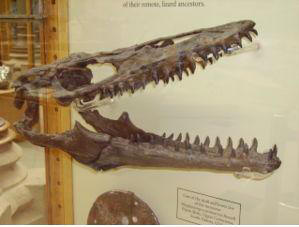
peoples, of a battle with dragons A National Geographic article (December 2005), section heading "UNKTEHILA, MONSTERS IN NATIVE AMERICA" (pg 74) relates how native American discoveries of fossilized remains of prehistoric marine reptiles, may have inspired legends of a terrible battle between the Wakinyan (Thunder beings) and the evil Unktehila (Water monsters).
|
Young Joseph's Knowledge of Book of Mormon Peoples and Things
Under
CHURCH HISTORY in the March 1, 1842 issue of the Times and Seasons,
the Prophet published a personal account of the coming forth of the Book
of Mormon: "...I
was informed that I was chosen to be an instrument in the hands of God
to bring about some of his purposes in this glorious dispensation. "I
was also informed concerning the aboriginal inhabitants of this
country, and shown who they were, and from whence they came; a brief
sketch of their origin, progress, civilization, laws, government, of
their righteousness and iniquity, and the blessings of God being finally
withdrawn from them as a people was made known to me: I was also told
where there was deposited some plates on which were engraven an
abridgement of the records of the ancient prophets that had existed on
this continent...After
having received many
visits from the angels of God unfolding the majesty, and glory of
the events that should transpire in the last days...the angel of the
Lord delivered the records into my hands. The Prophet Joseph Smith informs us that he was instructed by more than one divine messenger, and at the commencement of his training, he was actually show in vision "concerning the aboriginal inhabitants of this country..." Regarding these inhabitants, Joseph further explains:"The
Jaredites were destroyed about the time that the Israelites came from That Joseph received detailed information regarding Book of Mormon peoples and things is evidenced in a remark made by his Mother. She records:
"During
our evening conversations, Joseph, would occasionally give us some of
the most amusing recitals that could be imagined. He would describe the
ancient inhabitants of this continent, their dress, mode of traveling,
and the animals upon which they rode; their cities and buildings, with
every particular; their mode of warfare; and also their religious
worship. This he would do with as much ease, seemingly, as if he had
spent his whole life among them." (History
of Joseph Smith by His Mother Lucy Mack Smith, pg 83) In a divinely mandated letter to newspaper editor N.C. Saxton, dated January 4, 1833, Joseph said:
"The
Book of Mormon is a record of the forefathers of our western tribes of
Indians...after having been hid up in the earth for the last
fourteen hundred years, containing the word of God which was delivered
unto them. By it we learn that our western tribes of Indians are
descendents from that Joseph who was sold into Joseph' s expression "our western tribes of Indians" refers to Indian tribes who lived west, or were pushed west from the east coast of the United States by European expansion. (2 Nephi 1:10-11, Mormon 5:9, 19-20) LDS scriptures refers to the western "borders of the Lamanites" and "the line running directly between Jew and Gentile" in the vicinity of the western state of Missouri. (Doctrine and Covenants 54:8; 57:1-4)
Mountain Lion in the Snow, Photo by RJ Smith
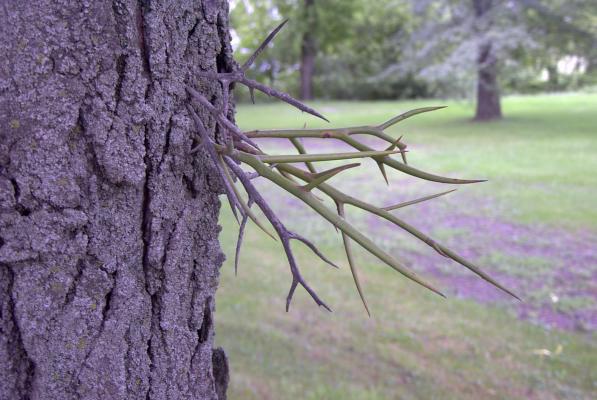
The
fruits of the Honey Locust were designed to lure giant herbivores to the
tree, where they would consume the foot-long honey-rich seed pods. The
pods were designed to pass through the gut of mammoths, mastodons and
other large extinct mammals. This is how the tree's seeds were
dispersed. The six inch hazardous thorns deterred the animals from
damaging the rest of the tree.
Controversial Elephant
Platform Pipe Recovered from a Mound near
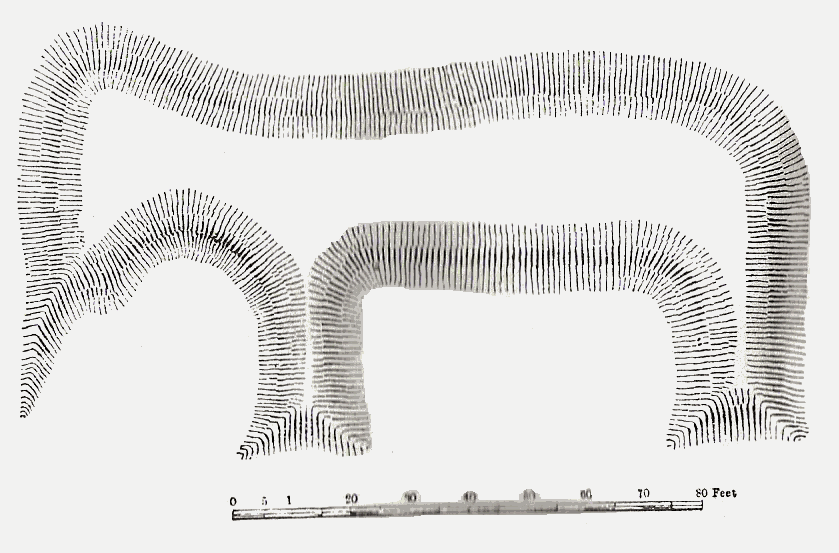
Elephant
Effigy Mound, Grant
Mosasaur
Skull (Oxford
"...and wounded the dragon."
(2 Nephi
8:9,
Isaiah 51:9)
Native
peoples of northern
|