WELCOME
to
Book of Mormon
Promised Land
"CHOICE ABOVE ALL OTHER LANDS"
The Genuine Setting for the Book of Mormon
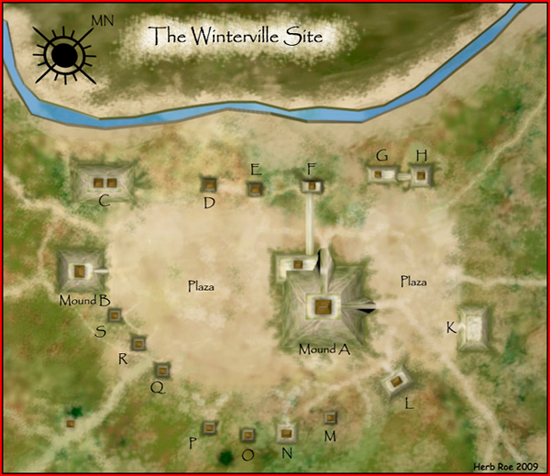
Art of Herb Roe, depicting a native North American earthwork complex
"Mound-Builder" Genre Textual Analysis
Crossing Sidon (YouTube) Journey along the line Bountiful (YouTube)
How could all those travels, settlements and battles have been in a land so small?
Wait – are we talking about the Book of Mormon or the Bible?
With nothing more than the Bible, and
the location of mount
Moriah,
we can deduce that the Mediterranean has to be
“the great sea westward”
neighboring the lands of
With nothing more than the Book of Mormon, and the location of Cumorah, we can deduce that Great Lake Erie has to be the “west sea” bordering Nephite and Lamanite lands!
Olive's Near Cumorah Setting by Deduction and Best Fit
Targeting Book of Mormon Geography Scapegoats!
The
Divided
Neck
The 344 Day Voyage of the Jaredites
The river SIDON
Scriptural IQ Test
Ethan Smith
and the Authentic Literary Setting for the
Book of Mormon
Lies -
Darned Lies and
Statistics
Joseph Smith, Josiah Priest and the
Beware Mark Hofmann’s Anthon Transcript Forgery!
Messianic Message
of the Stones of Memorial
Did Professor Anthon and Doctor Mitchell Actually
Read Some
Book of Mormon
Characters?
A Book of Mormon
Place Name Found in
the
Eastern United States
The Title of Liberty
Restored in Pre-exilic Hebrew
What Many Cannot Tell, Modern Demographics Can!
&
Meanings of ISRAEL -
ישראל
Nearly NAKED WARRIORS in winter?
With Clarifying Comments
Resolving the "six hundred years" Problem of the Book of Mormon
"LAMONI"
Didn't Mean
CROCODILE
Yes, there’s a place named “Lamanai” in
Where was Eden? Where is the Garden of God?
Abraham in Egypt
and the
Papyrus Solar
Ferry
The
IlElusive Kirtland Papyrus
"I cracked the Shulem cryptogram ... !"
Ah-meh-strah-an Resymbolization
.JPG)
.jpg)


.JPG)
Relativity of Simplicity
!
Who Originated the
Heartland Model?
"Zarahemla"
and a verse from Torah
"I'm the guy who made the biggest, most expensive film (The Church of Jesus
Christ of Latter-day Saints) has ever made, and I put it in the wrong
place."
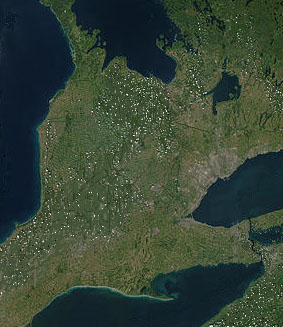
Image obtained from veimages.gsfc.nasa.gov
a land northward
There truly is a northern land in the
region where the Book of Mormon came forth, that is bordered by
bodies of water in each of the cardinal directions. This was not the covenant land of liberty that Lehi's descendants originally inherited, but a “desolate” land across from the
land of Desolation,
and from thence “northward”.
(Helaman 3:3-6,
Ether 2:7,
Alma 63:5) The seas
mentioned in the Book of Mormon are real. Inland bodies of water are
commonly called seas
in ancient scripture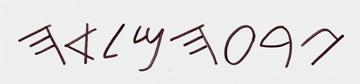
The Book of Mormon
“west sea” and “east sea”, on the other hand, are proper nouns - that is, they are the actual names of bodies of water that situate on the west and on the east respectively, of the lands of Zarahemla and Nephi. These principal Book of Mormon lands are southward from “the land northward” mentioned in Helaman 3:8. (Alma 50:8) The “west sea” and “east sea” also name inland bodies of water in the directions of sunrise and sunset in Old World Jerusalem. (Joel 2:20) The Hebrew name translated “utmost sea” (KJV) can also be translated “west sea”.The Book of Mormon
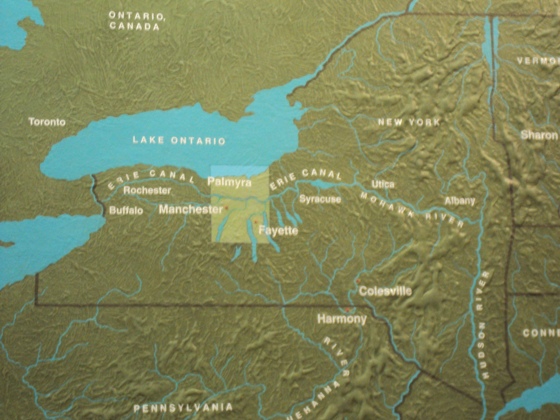
does not say that the entire land northward resides in land occupied by the United States of America. Traveling from the land of Desolation in the north (still on prophetic U.S. soil), to “the land southward”, we encounter the principal Book of Mormon lands of Bountiful, Zarahemla, and Nephi. These covenant lands are in the borders of the prophetic United States of America. (Alma 46:17) A more distant land northward, surrounded by seas in each of the cardinal directions matches perfectly Ontario Canada.
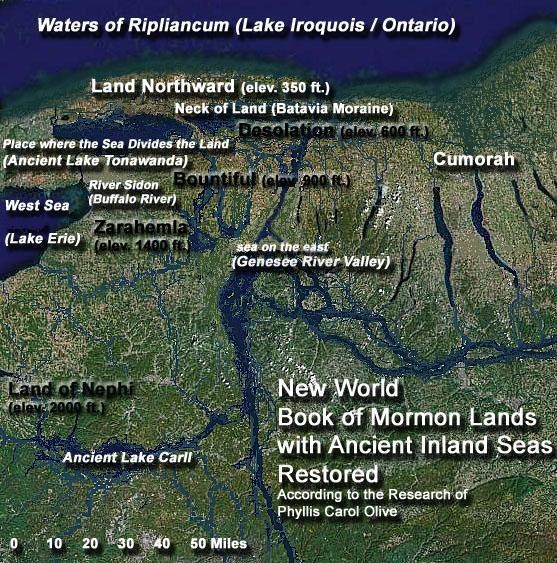
Image derived from Google Earth, © Copyright
GoogleAn Ancient Covenant Land of Liberty in the United States of America (Alma 46:17)
“And now, it was only the distance of a day and a half's journey for a Nephite, on the line Bountiful and the land Desolation, from the east to the west sea; and thus the land of Nephi and the land of Zarahemla
were nearly surrounded by water, there being a small neck of land between the land northward and the land southward.” (Alma 22:32)The Book of Mormon land of Zarahemla and “a land among many waters” by Cumorah, are so near each other, that travelers from the south mistook one region for the other. (Mosiah 8:7-8
; 21:25-26, Ether 9:3; 15:8-11) This overlooked fact proves many proposed "Book of Mormon" maps false! See Distances in the Book of Mormon's American Setting.Though the principal lands named in the Book of Mormon are comparable in size to the biblical land of Israel, there is no scriptural reason to believe that Lehi's covenant land of liberty is limited to only these (i.e. the lands of Nephi, Zarahemla, and Bountiful on the coast of “
the west sea” - Lake Erie). (Helaman 6:10, Ether 13:4-8) The “south countries”, south of Lake Erie (referred to by the Lord in Doctrine and Covenants 75:8, 17) fit the Book of Mormon “south countries”. (Mormon 6:15, 8:2) A temperate climate conducive to keeping the seasonal ordinances of the Mosaic Law, would have been the chief constraint on the extent of Lehi's inheritance. “Then will I remember my covenant...and I will remember the land.” (Leviticus 26:42)
|